
Township review
 Analysis by GetAllApps
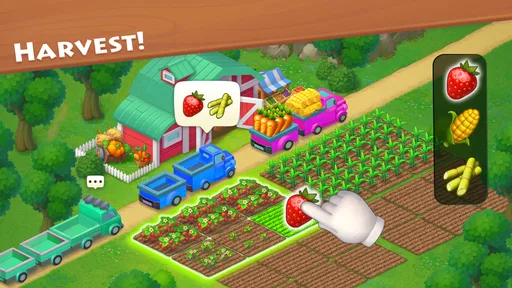
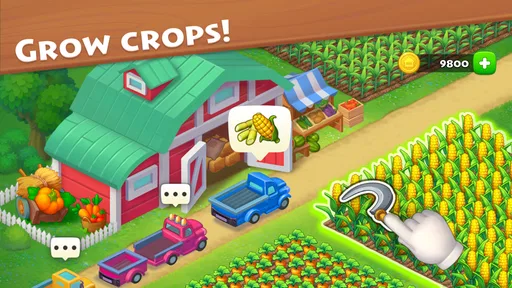
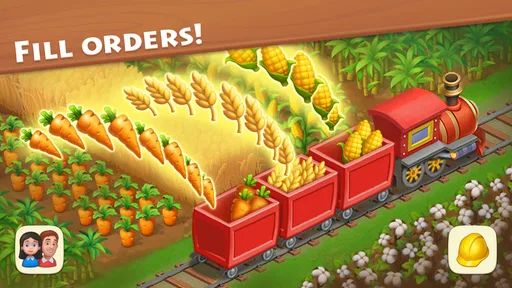
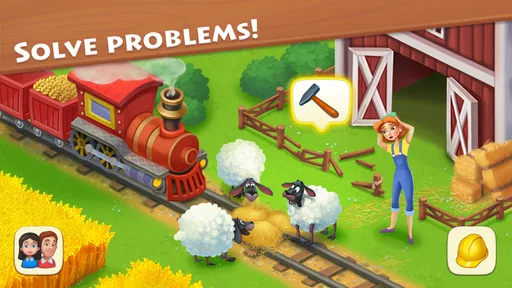
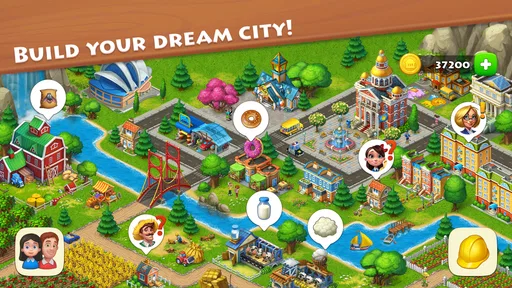
I like Township most when I treat it as two games sharing one place: a match-3 puzzle game that gives me small, focused challenges, and a town-building simulation that gives those wins a visible purpose. That link between the puzzle board and the growing community is its best idea. It also means the game asks for patience: progress comes in steps, and the town can feel less like a freeform building project than a long series of goals to work through.
A puzzle win that changes the town
Developed by Playrix, this casual game has been available since November 8, 2013. Its appeal is easy to understand after a short session: I solve a level, use the result to move town tasks forward, and return to a place that looks a little more developed. The loop gives individual puzzles a reason to matter beyond clearing a board, while the town gives the puzzle game a sense of continuity.
The two sides suit different moods. If I have only a few minutes, I can focus on a level without needing to plan a whole city. If I want a slower activity, I can look over what the town needs and decide which task to pursue next. That flexibility is useful, though it does not make the game equally satisfying for everyone: players who mainly want open-ended construction may find the puzzle progression too central.
That balance helps explain why Township has reached over 500 million installs and holds a 4.7 average from around 13 million ratings. Those figures suggest broad appeal, but they are not a promise that every part of the experience will suit a particular player. I would describe it as a polished, approachable casual game with a long-term routine, rather than a pure puzzle collection or a serious city-planning simulator.
Why the match-3 and building loop works
The strongest design choice is the connection between effort and visible progress. Match-3 games often rely on the satisfaction of finishing a board; here, puzzle progress also feeds the feeling that the town is moving somewhere. That makes a difficult level easier to tolerate when I can connect it to a goal I care about. It gives the game a more persistent rhythm than a sequence of unrelated puzzles.
There is a practical way to make that rhythm feel less random: before starting a session, check what the town is currently asking for, then keep that objective in mind while playing. It helps me avoid treating every level as an isolated test and makes short sessions feel purposeful. When I am not in the mood to chase one particular task, I can simply play at my own pace, but the connection is most rewarding when I know what my wins are working toward.
The town is also a useful change of pace from the puzzle board. Switching between solving and reviewing the settlement keeps either activity from dominating every moment. I find that especially welcome during a longer play session: the game offers a different kind of attention without asking me to leave its central loop. It is not a dramatic change of genre, but it is enough to make the routine feel more varied than a puzzle game that only presents another level.
One trade-off is that the city-building side is goal-led. I would not approach it expecting the freedom or detailed management of a dedicated construction simulator. The satisfaction comes more from developing a community through the game’s own progression than from inventing a complicated layout or running a realistic economy. If creative control is the main reason you enjoy building games, that distinction matters before you settle in.
Where patience becomes part of the game
The biggest limitation is the stop-start nature of progression. Some sessions feel brisk; others can turn into repeated attempts at a puzzle before I make the town progress I wanted. That friction is not unusual in a casual game built around levels and longer-term goals, but it can be frustrating when I have a specific task in mind and the puzzle in front of me does not cooperate.
I recommend separating a disappointing level from the whole game. If I am stuck, I take a break or switch my attention to the town rather than turning a casual session into a test of persistence. This is a small but useful habit: it prevents a single obstacle from making the entire experience feel like work. Players who prefer every level to be immediately solvable, or who dislike repeating attempts, may find the pacing less relaxing than the cheerful setting suggests.
There is also a spending consideration. The game is free to download, but it includes optional in-app purchases priced from $0.99 to $149.99 per item. I would go in with a personal spending limit, especially if I know that being close to a goal makes me tempted to pay for convenience. The free entry point is helpful, but it does not mean every route through the game is equally appealing to someone who wants to spend nothing.
My practical advice is to decide in advance whether you are comfortable waiting and progressing at your own pace, or whether you usually pay to avoid delays in games. If you prefer not to spend, focus on enjoying the ordinary loop rather than treating every stalled objective as something that must be solved immediately. If you dislike in-game purchase prompts or the possibility of feeling nudged toward spending, a standalone puzzle game with a simpler payment model may be a better fit.
How I would fit it into an ordinary day
For a realistic everyday use, I can see myself opening it during a short break, playing a level or two, then leaving the town goal for another session. The useful part is that I do not need to commit to a long planning session every time I play. The less useful part is that a quick check-in may not deliver the exact progress I hoped for if the puzzle takes several attempts. It works best when I am willing to enjoy the activity itself, not just rush toward a particular town milestone.
It is a better match for someone who likes having a soft long-term project in the background. The town gives repeat visits a reason, while the match-3 boards provide a familiar, compact task. A parent looking for a casual game to share with family may also appreciate its Everyone age rating and approachable premise, though I would still consider whether the purchase options fit the household’s expectations before handing over a device.
Compared with a conventional match-3 game, Township offers more continuity: there is a community to return to, not only a chain of boards. Compared with a traditional city builder, it puts less emphasis on detailed planning and more on progressing through a guided loop that includes puzzles. That middle ground is its identity, but it is also the clearest reason to choose another game if you know you want only one of those genres.
Who should install it—and who should pass
I would recommend it to players who enjoy match-3 challenges but want them tied to a persistent setting, and to casual builders who are happy for puzzles to shape the pace of their town. It is also a reasonable pick for someone who likes returning to a familiar project in brief sessions rather than sitting down for one long, demanding run. The game’s broad audience is reflected in its Everyone rating, though its steady progression still asks for patience.
I would skip it if I wanted a pure, uninterrupted puzzle experience, a highly flexible city-design sandbox, or a game with no optional spending at all. Those are not flaws in the same sense for every player; they are signs that Township has made a particular compromise. It blends the genres instead of letting either one stand alone, and that works only if the combination is part of the appeal.
The current version is 39.1.2, and the game remains free to start. Playrix has built a familiar, easy-to-enter loop around puzzles that contribute to a growing town, with enough variation between those activities to make repeat visits inviting. My verdict is positive but measured: Township is at its best when you enjoy progress in small, patient steps. Try it if that sounds satisfying; choose a focused puzzle game or a more open building alternative if you would rather avoid the trade-offs.
Pros and cons
Pros
- Combines town building with a satisfying match-three puzzle game.
- Offers a broad range of buildings and decorations for customization.
- Regular events provide fresh goals and themed rewards.
- Co-op features let players join regattas and trade goods.
- Runs on both Android and iOS devices.
Cons
- Progress can slow when construction and production timers get longer.
- Some upgrades and items require substantial in-game currency.
- Energy limits how many puzzle levels you can attempt in a row.
- Frequent events may make the game feel demanding to keep up with.
- An internet connection is needed for many features.


